In modern manufacturing and material handling industries, maximizing production capacity while maintaining efficiency is a top priority. Companies continuously seek innovative solutions that can improve workflow, reduce manual handling, and increase throughput without requiring major facility expansions. One such solution is the use of conveyor load bars in overhead conveyor systems.
Overhead conveyors are widely used in industries such as automotive, powder coating, fabrication, appliance manufacturing, warehousing, and assembly operations. By integrating properly designed load bars into these systems, businesses can significantly enhance carrying capacity, improve material flow, and optimize available space.
In this article, we will explore how conveyor load bars help increase capacity, their benefits, applications, and why they are an essential component of modern overhead conveyor systems.
What Are Conveyor Load Bars?
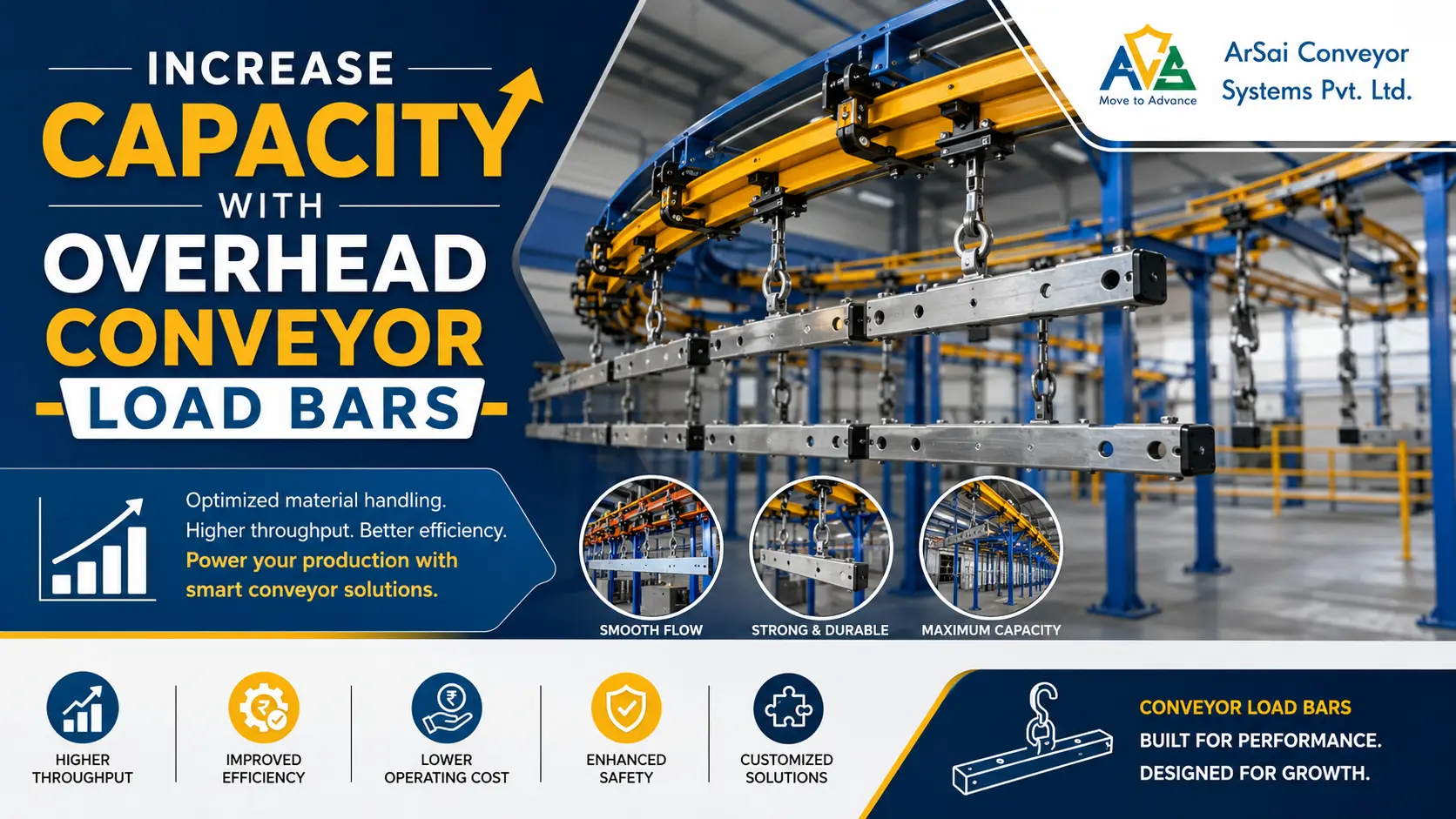
Conveyor load bars are specially designed structural components attached to an overhead conveyor system to support and carry products, components, assemblies, or materials during transportation. These bars act as load-bearing elements that distribute weight evenly and allow multiple items to be transported simultaneously.
Load bars are commonly used in:
- Overhead chain conveyors
- Monorail conveyor systems
- Power and free conveyors
- Paint shop conveyor lines
- Assembly line conveyors
- Material handling systems
Their design can be customized based on product size, weight, and operational requirements.
Also Read: Types of Warehouse Conveyors: How to Choose the Right One for Your Application
Why Capacity Matters in Material Handling
Production capacity directly impacts profitability and operational efficiency. When material movement becomes a bottleneck, production delays can occur, reducing overall productivity.
Many facilities face challenges such as:
- Limited floor space
- High labor costs
- Increased production demands
- Congested work areas
- Inefficient material transportation
Installing advanced overhead conveyor systems equipped with properly engineered conveyor load bars helps address these challenges by enabling more products to move through the production process simultaneously.
How Conveyor Load Bars Increase Capacity
Carry More Products Per Cycle
One of the biggest advantages of conveyor load bars is their ability to support multiple products on a single carrier. Instead of transporting one item at a time, load bars allow several components to move together, increasing throughput without increasing conveyor speed.
Better Utilization of Vertical Space
Overhead conveyors make use of unused vertical space within a facility. By incorporating load bars, manufacturers can maximize this advantage and transport larger quantities of products overhead while keeping production floors clear.
Reduced Handling Time
Efficient load bar designs minimize loading and unloading times. This reduces manual intervention and helps streamline production processes.
Improved Workflow Efficiency
By increasing carrying capacity, conveyor load bars help maintain a continuous flow of materials between different production stages, reducing delays and bottlenecks.
Increased Production Output
When more products can be moved during each conveyor cycle, overall production capacity naturally increases.
Key Features of Conveyor Load Bars
High Load-Bearing Capacity
Modern conveyor load bars are designed using robust materials that can withstand heavy industrial loads while maintaining structural integrity.
Customizable Design
Load bars can be customized according to:
- Product dimensions
- Load requirements
- Conveyor type
- Industry application
Corrosion Resistance
For environments such as powder coating plants and paint shops, load bars can be manufactured with corrosion-resistant finishes to ensure long-term durability.
Balanced Weight Distribution
Properly engineered conveyor load bars distribute weight evenly across the conveyor system, reducing stress on chains, trolleys, and support structures.
Long Service Life
High-quality materials and precision fabrication contribute to extended operational life and lower maintenance requirements.
Benefits of Using Conveyor Load Bars
- Increased Productivity- The ability to transport more products simultaneously directly boosts productivity levels.
- Reduced Labor Dependency- Automated overhead conveying systems equipped with load bars reduce manual material handling requirements.
- Improved Space Utilization- Businesses can optimize available facility space without expanding production areas.
- Enhanced Safety- Overhead transport minimizes floor congestion and reduces workplace accidents associated with manual material movement.
- Lower Operational Costs- Improved efficiency and reduced handling requirements contribute to lower overall operating expenses.
- Better Process Control- roducts move through the production line in a controlled and consistent manner, improving quality and workflow management.
Applications of Conveyor Load Bars
- Automotive Industry- Automotive manufacturers use conveyor load bars for transporting vehicle components, chassis parts, and assemblies through production lines.
- Powder Coating Plants- Load bars are widely used in powder coating systems where multiple components must pass through cleaning, coating, and curing processes.
- Fabrication Industry- Metal fabrication facilities utilize overhead conveyor load bars to move fabricated parts efficiently between workstations.
- Appliance Manufacturing- Manufacturers of refrigerators, washing machines, and other appliances use load bars to transport components during assembly operations.
- Warehousing and Logistics- Distribution centers use conveyor systems with load bars for efficient product handling and inventory movement.
- Engineering Industries- Heavy engineering facilities rely on conveyor load bars for transporting industrial components safely and efficiently.
Factors to Consider When Selecting Conveyor Load Bars
- Load Capacity- The load bar must be capable of safely supporting the maximum weight of products being transported.
- Product Dimensions- The size and shape of products influence load bar design and configuration.
- Conveyor Type- Different conveyor systems require different load bar specifications.
- Environmental Conditions- Factors such as temperature, humidity, chemicals, and dust should be considered during material selection.
- Maintenance Requirements- Choosing durable and low-maintenance load bars helps reduce downtime and operating costs.
Why Choose Overhead Conveyor Systems with Load Bars?
Overhead conveyor systems are already known for their ability to save floor space and improve material flow. When combined with high-quality conveyor load bars, they become even more efficient.
Businesses benefit from:
- Higher carrying capacity
- Faster production cycles
- Improved workflow
- Better resource utilization
- Reduced manual handling
- Increased operational efficiency
These advantages make conveyor load bars an essential component for companies seeking to expand production capacity without significant infrastructure investments.
Future of Conveyor Load Bar Technology
As manufacturing facilities adopt Industry 4.0 technologies, conveyor systems are becoming increasingly advanced.
Future developments may include:
- Smart load monitoring systems
- IoT-enabled conveyor tracking
- Lightweight high-strength materials
- Automated load balancing
- Predictive maintenance integration
These innovations will further enhance the performance and efficiency of overhead conveyor systems.
Conclusion
For industries aiming to improve productivity and optimize material handling operations, conveyor load bars offer a highly effective solution. By increasing carrying capacity, improving workflow efficiency, and maximizing overhead space utilization, these components play a critical role in modern conveyor systems.
Whether used in automotive manufacturing, powder coating plants, engineering workshops, or warehousing facilities, properly designed conveyor load bars help businesses achieve higher throughput and better operational performance. Investing in quality overhead conveyor systems with engineered load bars is a practical and cost-effective way to increase production capacity while maintaining efficiency and workplace safety.