Today’s warehouse facilities process thousands of items on a daily basis. Efficient material handling is vital for keeping operations running smoothly from the loading of incoming goods to sorting of inventory, packing of orders and dispatching of shipments. Here come warehouse conveyors which play an important part in streamlining operations and automation of the process.
However, selecting the right conveyor system can be challenging because there are many types of warehouse conveyors available in the market. Each conveyor is designed for specific applications, load capacities, and warehouse layouts. Understanding the types of conveyors can help businesses make an informed decision and maximize their return on investment.
In this guide, we will explore the different types of conveyors, their applications, and the key factors to consider when choosing the best conveyor system for your warehouse.
What Are Warehouse Conveyors?
Warehouse conveyors are automated material handling systems used to transport products, cartons, pallets, and other items within a warehouse or distribution center. These systems streamline operations by moving goods efficiently between various stages of storage, sorting, packaging, and shipping. The use of warehouse conveyors helps reduce handling time, minimize workplace injuries, and improve overall workflow efficiency.
Also Read: Screw Conveyors: Types, Components, Configurations, and Applications
Why Are Warehouse Conveyors Important?
A well-designed conveyor system offers several benefits, including:
- Faster material movement
- Increased productivity
- Reduced labor costs
- Improved order accuracy
- Enhanced workplace safety
- Better space utilization
- Continuous workflow operations
As warehouses continue to adopt automation technologies, conveyors have become a critical component of modern logistics and supply chain management.
Understanding the Different Types of Conveyors
Before selecting a conveyor system, it is important to understand the different types of conveyors available for warehouse applications.
1. Belt Conveyors
Belt conveyors are among the most common types of conveyor systems used in warehouses. They consist of a continuous belt that moves products from one point to another.
Applications:
- Package handling
- E-commerce fulfillment centers
- Distribution centers
- Assembly operations
Advantages:
- Smooth product transportation
- Suitable for various product sizes
- Quiet operation
- Low maintenance requirements
Belt conveyors are ideal for handling lightweight to medium-weight products over long distances.
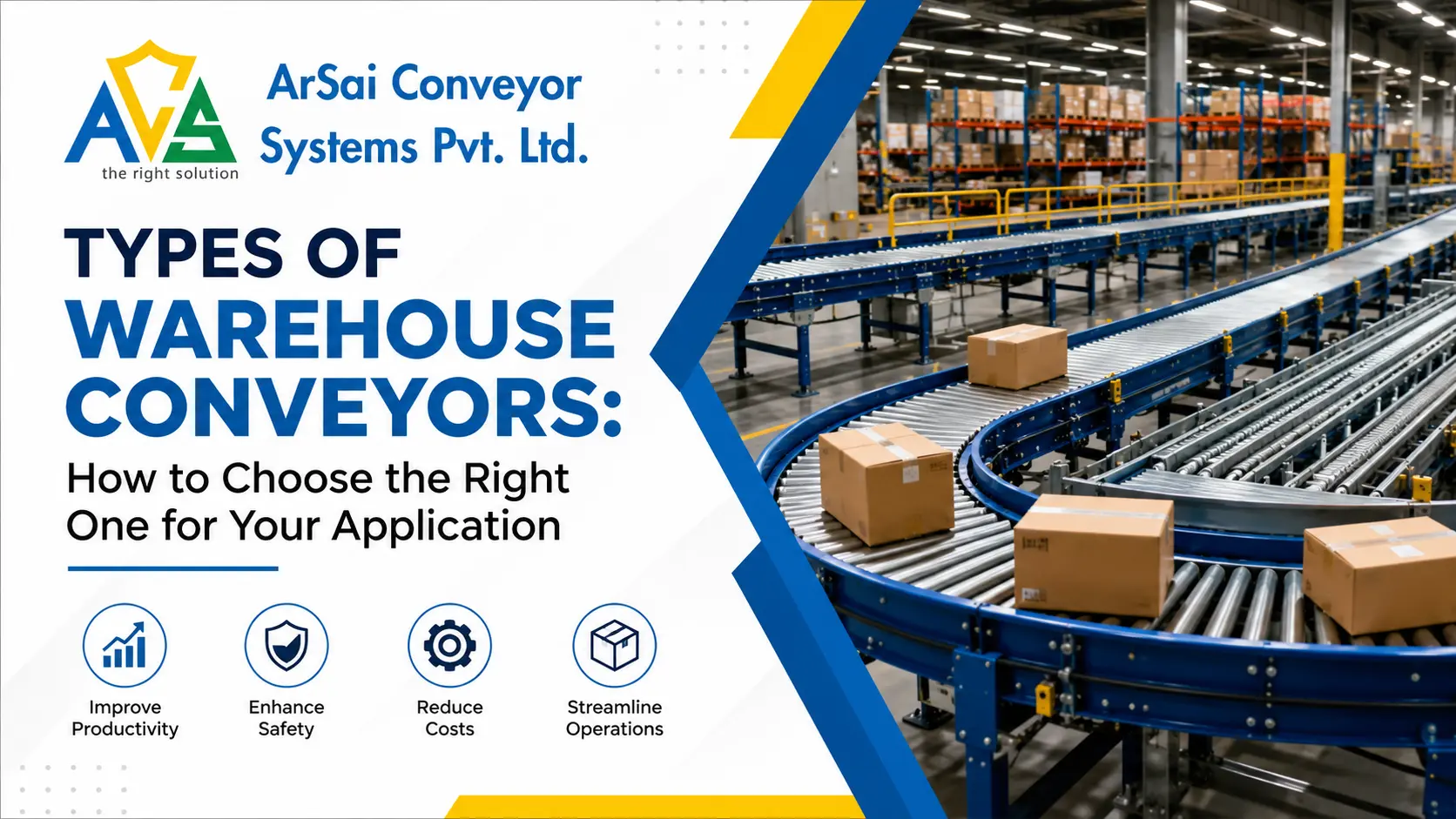
2. Roller Conveyors
Roller conveyors use a series of rollers to move goods. They can be gravity-driven or powered depending on operational requirements.
Applications:
- Carton transportation
- Shipping areas
- Packaging lines
- Warehouse sorting operations
Advantages:
- Cost-effective solution
- Easy installation
- Suitable for heavy loads
- Flexible system design
Roller conveyors are one of the most popular types of warehouse conveyors used in logistics facilities.
3. Chain Conveyors
Chain conveyors use interconnected chains to transport heavy materials and pallets.
Applications:
- Pallet handling
- Manufacturing facilities
- Heavy-duty warehouse operations
Advantages:
- High load capacity
- Durable construction
- Reliable performance
- Suitable for harsh environments
For warehouses handling large and heavy products, chain conveyors provide excellent strength and durability.
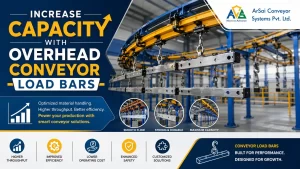
4. Overhead Conveyors
Overhead conveyors are suspended from the ceiling, allowing products to move above the warehouse floor.
Applications:
- Automotive industries
- Paint shops
- Garment handling
- Manufacturing facilities
Advantages:
- Saves floor space
- Improves workflow efficiency
- Reduces congestion
- Supports continuous movement
These systems are ideal when floor space is limited and maximum storage utilization is required.
5. Slat Conveyors
Slat conveyors consist of linked slats attached to chains that move products securely along the conveyor path.
Applications:
- Heavy products
- Industrial components
- Packaging operations
Advantages:
- Strong and durable
- Handles irregular-shaped products
- Suitable for high-temperature environments
Slat conveyors are often chosen for demanding industrial applications.
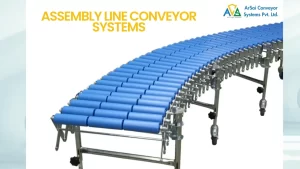
6. Flexible Conveyors
Flexible conveyors can be extended, curved, or repositioned according to changing warehouse needs.
Applications:
- Loading and unloading trucks
- Temporary warehouse setups
- Seasonal operations
Advantages:
- Portable design
- Space-saving solution
- Easy deployment
- High flexibility
Businesses requiring adaptable material handling solutions often prefer flexible conveyors.
7. Spiral Conveyors
Spiral conveyors are designed to move products vertically between different floor levels while occupying minimal floor space.
Applications:
- Multi-level warehouses
- Distribution centers
- Food processing facilities
Advantages:
- Space-efficient design
- Continuous product flow
- Reduced warehouse footprint
They are highly effective for warehouses with multiple operational levels.
8. Sortation Conveyors
Sortation conveyors automatically identify and direct products to specific destinations.
Applications:
- E-commerce warehouses
- Courier facilities
- Parcel distribution centers
Advantages:
- High sorting accuracy
- Faster order processing
- Reduced manual handling
- Increased throughput
These advanced systems are essential for warehouses handling large volumes of orders daily.
Factors to Consider When Choosing Warehouse Conveyors
Understanding the types of conveyors is only the first step. Selecting the right conveyor system requires careful evaluation of your operational needs.
1. Product Characteristics
Consider the size, weight, shape, and fragility of the products being transported.
Questions to ask:
- Are products lightweight or heavy?
- Are they packaged or unpackaged?
- Do they require gentle handling?
Different products may require different types of warehouse conveyors.
2. Warehouse Layout
The physical layout of your facility plays a significant role in conveyor selection.
Consider:
- Available floor space
- Ceiling height
- Workflow design
- Expansion possibilities
A conveyor system should integrate seamlessly with your warehouse infrastructure.
3. Throughput Requirements
Evaluate how many products need to move through the system per hour.
High-volume operations often require:
- Powered conveyors
- Sortation systems
- Automated controls
Lower-volume operations may benefit from simpler conveyor solutions.
4. Load Capacity
Each conveyor system has specific weight limitations.
Heavy-duty applications may require:
- Chain conveyors
- Slat conveyors
- Heavy-duty roller conveyors
Selecting a conveyor with insufficient capacity can lead to breakdowns and increased maintenance costs.
5. Automation Level
Modern warehouses increasingly rely on automation.
If future automation is planned, choose conveyor systems that can integrate with:
- Warehouse Management Systems (WMS)
- Barcode scanners
- Robotics
- Automated storage systems
This ensures long-term scalability and operational efficiency.
6. Maintenance Requirements
Maintenance directly impacts operational uptime.
Look for conveyor systems that offer:
- Easy access to components
- Durable construction
- Reliable performance
- Minimal downtime
Preventive maintenance can significantly extend equipment lifespan.
7. Budget Considerations
Cost is always an important factor.
While initial investment matters, businesses should also consider:
- Operating costs
- Maintenance expenses
- Energy consumption
- Long-term productivity gains
The most affordable option may not always provide the best value over time.
How the Right Conveyor Improves Warehouse Efficiency
Selecting the appropriate conveyor system can transform warehouse operations by:
- Reducing order fulfillment times
- Increasing employee productivity
- Minimizing product damage
- Improving inventory flow
- Enhancing customer satisfaction
The right solution ensures smoother operations and supports future business growth.
Future Trends in Warehouse Conveyors
The warehouse industry is rapidly evolving with advancements in automation and smart technology.
Emerging trends include:
- AI-powered conveyor systems
- Smart sensors for predictive maintenance
- Energy-efficient conveyor designs
- Integration with autonomous mobile robots (AMRs)
- Real-time monitoring and analytics
As technology advances, warehouse conveyors will continue to play an even greater role in improving operational efficiency.
Conclusion
Understanding the various types of warehouse conveyors is essential for selecting the most suitable material handling solution. Whether you need belt conveyors, roller conveyors, chain conveyors, overhead conveyors, or advanced sortation systems, choosing the right equipment depends on your products, warehouse layout, throughput requirements, and future growth plans.
By evaluating the different types of conveyors and matching them to your operational needs, businesses can improve efficiency, reduce costs, and create a more productive warehouse environment. Investing in the right conveyor system today can provide long-term benefits and help your warehouse stay competitive in an increasingly automated industry.
ArSai Conveyor Systems Pvt. Ltd. specializes in designing and manufacturing high-quality conveyor solutions tailored to diverse warehouse and industrial applications, helping businesses achieve efficient and reliable material handling operations.