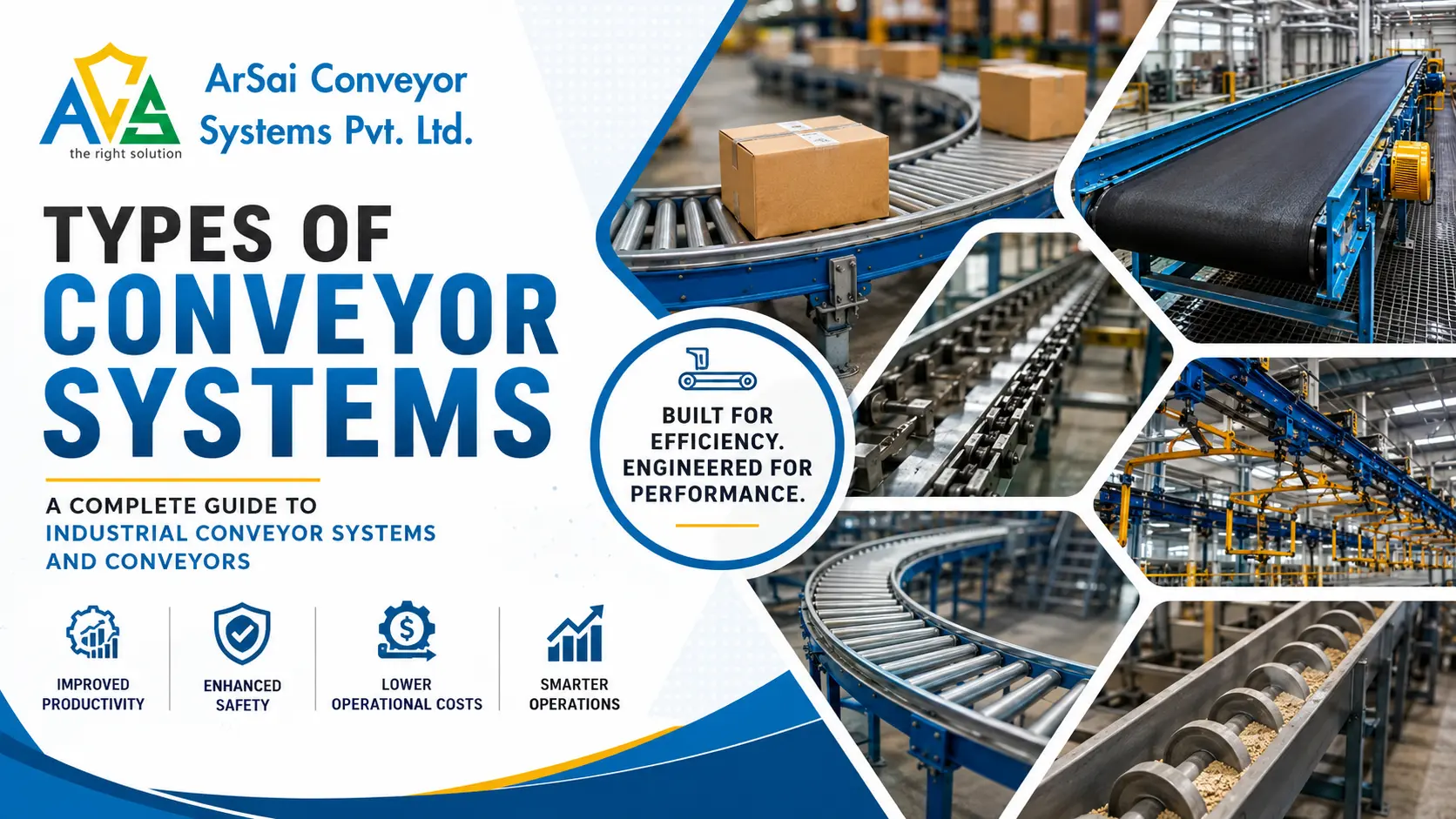
In today’s fast-paced industrial environment, efficient material handling is essential for maintaining productivity, reducing labor costs, and ensuring workplace safety. This is where industrial conveyor systems play a crucial role. From manufacturing plants and warehouses to packaging units and distribution centers, conveyors have become an integral part of modern industrial operations.
Understanding the different types of conveyor systems can help businesses select the right solution for their specific requirements. In this comprehensive guide, we will explore the most common types of conveyors, their applications, benefits, and how they contribute to streamlined industrial processes.
What Are Industrial Conveyor Systems?
Industrial conveyor systems are mechanical handling equipment designed to transport materials, products, or goods from one location to another within a facility. These systems automate material movement, improving efficiency and minimizing manual handling.
Modern industrial conveyor systems are available in various configurations and can be customized to meet the needs of different industries, including automotive, food processing, pharmaceuticals, e-commerce, logistics, mining, and manufacturing.
By implementing the right conveyor solution, businesses can increase productivity, improve workflow, and reduce operational costs.
Why Are Conveyors Important in Industrial Operations?
Conveyors provide a reliable and cost-effective method of transporting materials throughout a facility. Instead of relying on manual labor, conveyor systems automate repetitive transportation tasks, reducing errors and improving efficiency.
Some key benefits include:
- Faster material movement
- Reduced labor requirements
- Improved workplace safety
- Consistent production flow
- Lower operational costs
- Enhanced productivity
- Better inventory management
These advantages make conveyors a valuable investment for businesses looking to optimize their operations.
Types of Conveyor Systems
There are several types of conveyor systems available today, each designed for specific applications and material handling requirements.
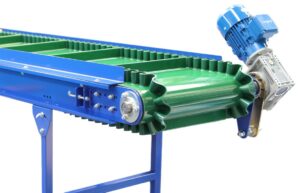
1. Belt Conveyor Systems
Belt conveyors are among the most commonly used conveyor systems in industrial environments. They consist of a continuous belt that moves over rollers or pulleys to transport materials.
Applications:
- Manufacturing facilities
- Packaging industries
- Airports
- Warehouses
- Distribution centers
Benefits:
- Suitable for long-distance transportation
- Smooth and quiet operation
- Handles various product sizes
- Cost-effective solution
Belt conveyors are ideal for transporting lightweight to medium-weight products efficiently.
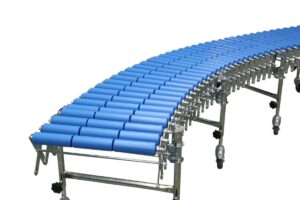
2. Roller Conveyor Systems
Roller conveyors use cylindrical rollers to move products either manually or through powered mechanisms.
Applications:
- Warehousing
- Logistics centers
- Assembly lines
- Packaging facilities
Benefits:
- Easy maintenance
- Energy-efficient
- Suitable for heavy loads
- Flexible design options
Roller systems are one of the most versatile types of conveyors used in industrial material handling.
3. Chain Conveyor Systems
Chain conveyors utilize continuous chains to move heavy products through production and assembly processes.
Applications:
- Automotive manufacturing
- Steel industries
- Heavy equipment production
- Industrial assembly lines
Benefits:
- High load capacity
- Durable construction
- Reliable performance
- Suitable for harsh environments
Chain conveyors are widely used when transporting large and heavy materials.
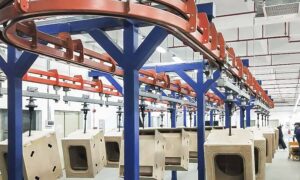
4. Overhead Conveyor Systems
Overhead conveyors transport products above the working area using suspended tracks and carriers.
Applications:
- Automotive paint shops
- Powder coating plants
- Garment industries
- Manufacturing facilities
Benefits:
- Maximizes floor space
- Improves workflow efficiency
- Enhances safety
- Ideal for continuous production
Overhead systems are among the most space-efficient industrial conveyor systems available today.
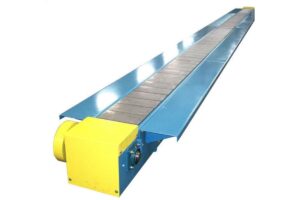
5. Slat Conveyor Systems
Slat conveyors feature interconnected slats attached to chains that carry products along a predetermined path.
Applications:
- Assembly lines
- Beverage industries
- Heavy manufacturing
- Packaging operations
Benefits:
- Excellent stability
- Handles heavy products
- Durable construction
- Long service life
These conveyors are suitable for transporting products that cannot be easily moved on traditional belt systems.
6. Screw Conveyor Systems
Screw conveyors use a rotating helical screw blade to move bulk materials through a trough or tube.
Read more about screw conveyor
Applications:
- Agriculture
- Food processing
- Chemical industries
- Cement plants
Benefits:
- Compact design
- Dust-free transportation
- Low maintenance
- Efficient bulk material handling
They are highly effective for moving powders, granules, and semi-solid materials.
7. Bucket Conveyor Systems
Bucket conveyors use attached buckets to transport bulk materials vertically or at an incline.
Applications:
- Grain handling
- Mining operations
- Cement industries
- Fertilizer plants
Benefits:
- Efficient vertical transportation
- High capacity
- Reduced material spillage
- Suitable for bulk materials
These systems are commonly used where materials need to be elevated between different levels.
8. Power and Free Conveyor Systems
Power and free conveyors provide greater flexibility by allowing carriers to move independently on the conveyor track.
Applications:
- Automotive manufacturing
- Industrial painting
- Assembly operations
- Material handling systems
Benefits:
- Flexible product routing
- Increased production efficiency
- Better process control
- Reduced downtime
They are ideal for complex production environments requiring multiple processing stages.
How to Choose the Right Type of Conveyor
Selecting the appropriate type of conveyor depends on several important factors:
- Material Characteristics- Consider the size, weight, shape, and fragility of the products being transported.
- Production Requirements- Evaluate throughput needs, operating hours, and workflow requirements.
- Facility Layout- The available space and plant design will influence the most suitable conveyor system.
- Environmental Conditions- Factors such as temperature, moisture, dust, and chemicals should be considered during system selection.
- Maintenance Needs- Choose a conveyor system that aligns with your maintenance capabilities and operational budget.
Working with an experienced conveyor manufacturer can help ensure the best solution for your application.
Industries That Use Conveyor Systems
Today, industrial conveyor systems are used across numerous industries, including:
- Automotive Manufacturing
- Food and Beverage Processing
- Pharmaceuticals
- E-commerce and Warehousing
- Packaging Industries
- Mining Operations
- Cement Plants
- Logistics and Distribution Centers
- Textile Manufacturing
- Electronics Production
Each industry relies on specialized conveyors to improve productivity and streamline operations.
Future Trends in Conveyor Technology
The future of conveyor systems is being shaped by automation and smart technologies. Modern systems now feature:
- IoT-enabled monitoring
- Predictive maintenance
- Energy-efficient drives
- Automated controls
- Real-time performance tracking
- Advanced safety features
These innovations are helping businesses maximize efficiency while minimizing operational costs.
Conclusion
Understanding the different types of conveyor systems is essential for businesses seeking efficient material handling solutions. Whether you require belt conveyors, roller conveyors, chain conveyors, overhead conveyors, or other specialized systems, selecting the right solution can significantly improve productivity and operational performance.
As industries continue to evolve, advanced industrial conveyor systems will remain a critical component of modern manufacturing and logistics operations. By choosing the right types of conveyors, businesses can achieve smoother workflows, enhanced safety, and long-term operational success.
ArSai Conveyor Systems Pvt. Ltd. specialize in designing and manufacturing high-quality conveyor solutions according to diverse industrial requirements. Our expertise in advanced material handling technology helps businesses achieve greater efficiency, reliability, and productivity.