Conveyor systems are an important part of many industries because they help move products and materials from one place to another quickly and efficiently. Whether it is a warehouse, food processing unit, packaging industry, manufacturing plant, or mining operation, conveyor belts make the work easier and faster. However, not all conveyor belts are made from the same material. Different industries require different conveyor belt material options depending on the type of products being transported.
Choosing the right material is important because it directly affects performance, durability, and maintenance costs. Understanding different belt material types can help industries select the best solution according to their needs.
In this blog, we will discuss the 4 Types of Conveyor Belt Materials and understand how each material is used in different applications.
Why Conveyor Belt Material Matters?
Before selecting a conveyor system, it is important to understand that every industry has different operational requirements. Some industries transport lightweight products, while others handle heavy loads, chemicals, or food products. This is where selecting the right conveyor belt material types becomes essential.
The correct material can provide:
- Better durability
- Smooth transportation of materials
- Lower maintenance costs
- Longer service life
- Improved efficiency and productivity
Now let’s understand the most commonly used types of conveyor belt material in industries.
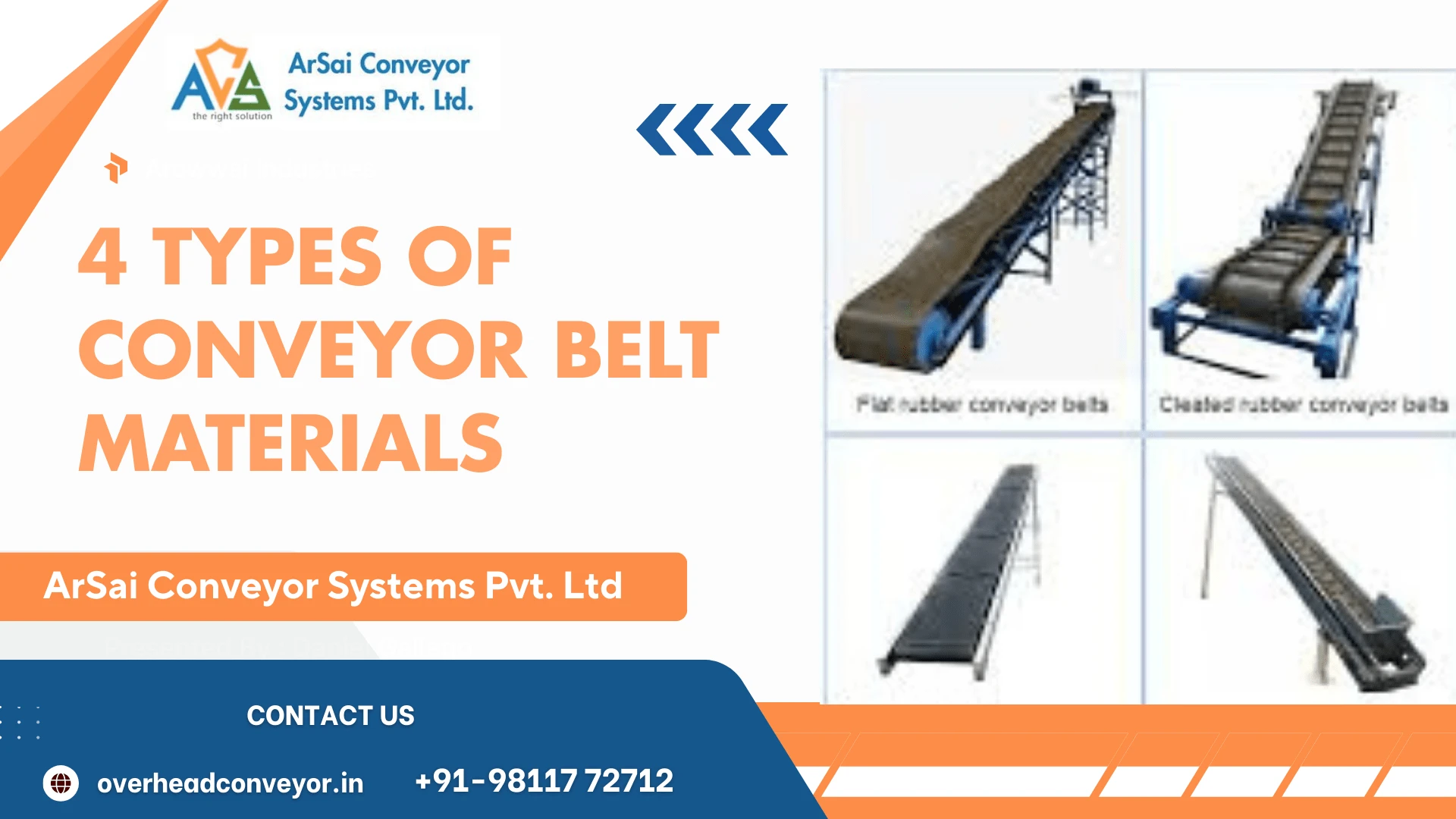
1. Rubber Conveyor Belt Material
Rubber is one of the most widely used conveyor belt material options because of its flexibility and durability. Rubber conveyor belts are suitable for heavy-duty industrial applications and can handle rough working environments.
Rubber belts are commonly used in:
- Mining industries
- Construction sites
- Manufacturing units
- Material handling industries
The biggest advantage of rubber conveyor belts is that they can withstand heavy loads and provide excellent resistance to wear and tear.
2. PVC Conveyor Belt Material
PVC (Polyvinyl Chloride) conveyor belts are lightweight and widely used for industries that require smooth and clean product handling. These belts are commonly used in food processing and packaging applications.
PVC belts are suitable for:
- Food industries
- Packaging units
- Pharmaceutical companies
- Logistics operations
Among various conveyor belt material types, PVC belts are popular because they require less maintenance and provide good resistance against moisture and chemicals.
3. Metal Conveyor Belt Material
Metal conveyor belts are designed for applications where strength and heat resistance are important. These belts are usually manufactured from stainless steel or other durable metals.
Metal conveyor belts are commonly used in:
- Heavy manufacturing industries
- Automotive plants
- High-temperature applications
- Industrial processing units
These belt material types are ideal for industries that require strong performance and long-term durability.
4. Fabric Conveyor Belt Material
Fabric conveyor belts are made by combining different layers of synthetic or natural materials. These belts are lightweight and flexible, making them useful for various industrial operations.
Fabric conveyor belts are generally used in:
- Warehouses
- Distribution centers
- Agriculture industries
- Packaging applications
Fabric belts are considered cost-effective and provide smooth transportation for lighter products.
Different Conveyor Belt Types and Their Applications
There are many conveyor belt types available in the market, and each one serves a different purpose. The material used in the belt often determines where it will be used.
Some commonly used conveyor systems include:
- Flat belt conveyors
- Roller conveyors
- Inclined conveyors
- Slat conveyors
- Modular belt conveyors
- Heavy-duty industrial conveyors
Choosing the right conveyor system and selecting suitable types of conveyor belt material can improve operational performance and reduce maintenance issues.
How to Choose the Right Conveyor Belt Material?
Selecting the correct conveyor belt depends on several factors, including:
- Type of material being transported – Lightweight or heavy products require different materials.
- Working environment – Temperature, moisture, and chemical exposure can affect belt performance.
- Load capacity – Heavy-duty applications need stronger materials.
- Maintenance requirements – Some materials require more maintenance than others.
Understanding these points helps businesses choose the most suitable conveyor belt material types for long-term efficiency.
Conclusion
Selecting the correct conveyor belt material is essential for improving productivity and ensuring smooth industrial operations. Different belt material types have different benefits, and choosing the right one depends on the specific application requirements.
Among the various conveyor belt types, rubber, PVC, metal, and fabric belts are some of the most commonly used options across industries. Understanding these types of conveyor belt material helps businesses make better decisions and improve the overall performance of their conveyor systems.
ArSai Conveyor Systems Pvt. Ltd. provide advanced conveyor solutions designed to meet the material handling requirements of various industries with quality, durability, and reliable performance.