Material handling is an important part of modern industries. Whether it is a manufacturing plant, warehouse, or packaging unit, smooth and efficient material movement increases productivity and reduces labor costs. One of the most widely used material handling solutions is the belt conveyor system.
If you are searching for what is belt conveyor, how it works, and how it is designed, this complete guide will explain everything in simple and clear language.
What is Belt Conveyor?
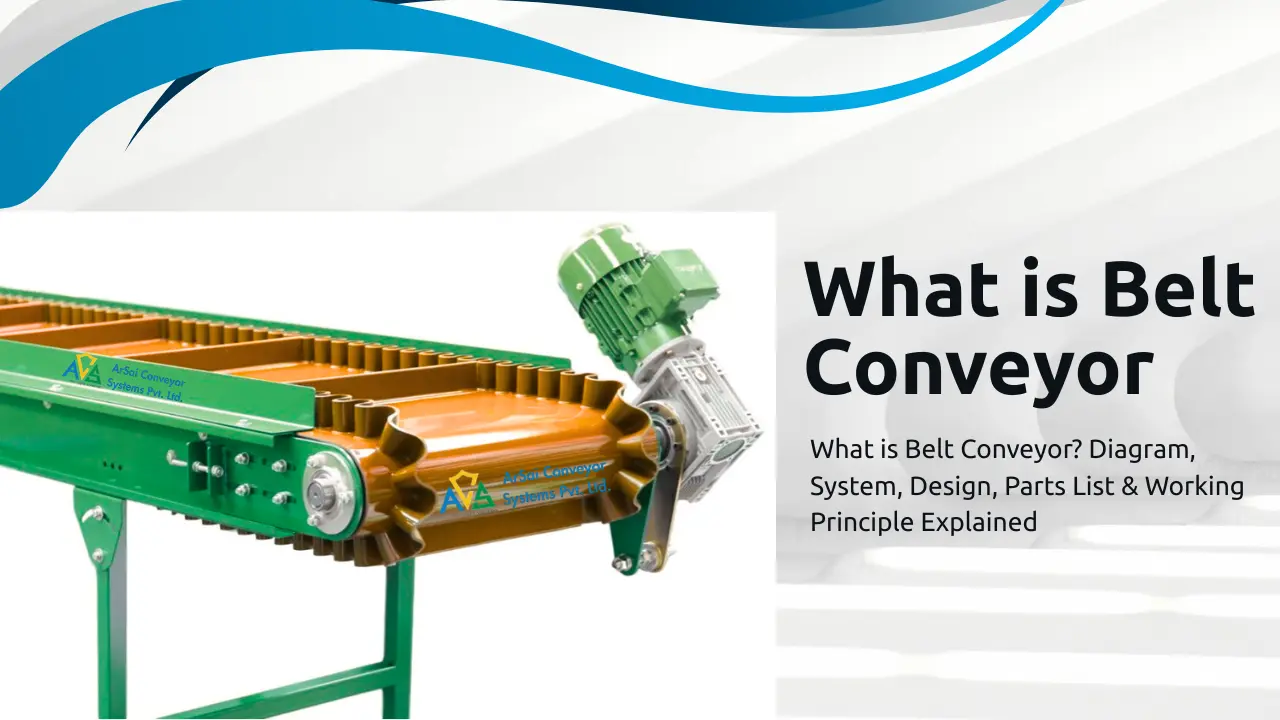
A belt conveyor is a mechanical equipment used to transport materials from one location to another using a continuous moving belt. It is commonly used in industries to move bulk materials, cartons, boxes, raw materials, and finished goods efficiently.
In simple words, when someone asks what is belt conveyor, the answer is straightforward:
It is a material handling system that uses a rotating belt driven by a motor to move products smoothly across different distances.
Because of its simple structure and reliable performance, the belt conveyor system has become an important part of industrial operations.
Belt Conveyor System
A belt conveyor system is made up of multiple components that work together to ensure continuous material movement. The system includes mechanical parts like pulleys and rollers, along with electrical components such as motors and control panels.
The main function of a belt conveyor system is to transport materials safely, quickly, and with minimum manual effort. It can be customized according to the type of material, production capacity, and factory layout.
Industries prefer belt conveyor systems because they offer consistent performance, low maintenance, and long service life.
Belt Conveyor Diagram
To understand the structure clearly, engineers often refer to a belt conveyor diagram. A standard belt conveyor diagram shows how different components are arranged and connected.
In a typical belt conveyor diagram, you will find the drive pulley at one end, the tail pulley at the other end, and the conveyor belt running continuously between them. Rollers or idlers support the belt and help in smooth movement.
The motor and gearbox provide the required power to rotate the drive pulley. A properly labeled belt conveyor diagram helps during installation, troubleshooting, and maintenance of the system.
Belt Conveyor Working Principle
The belt conveyor working principle is based on the friction between the conveyor belt and the drive pulley. When the electric motor starts, it rotates the drive pulley. Due to friction, the belt begins to move forward. As the belt moves, the material placed on it is carried from the loading point to the discharge point. After unloading, the belt returns to its original position and continues the cycle.
This simple yet effective belt conveyor working principle allows continuous transportation without interruption, making it ideal for industrial use.
Belt Conveyor Design
Proper belt conveyor design is very important to ensure efficient and long-term performance. Engineers consider several factors while designing a conveyor system, including the type of material being transported, load capacity, belt speed, conveyor length, and operating conditions.
A well-planned belt conveyor design ensures smooth belt alignment, reduced wear and tear, energy efficiency, and safe operation. The design may also include features such as incline angles, side supports, or protective covers depending on industrial requirements. Customized belt conveyor design helps industries improve workflow and reduce downtime.
Belt Conveyor Parts List
Understanding the belt conveyor parts list is essential for maintenance and system upgrades. Although the configuration may vary, most systems include a conveyor belt, drive pulley, tail pulley, rollers, motor, gearbox, frame structure, and control panel.
Additional components such as belt cleaners, bearings, take-up units, and safety guards may also be included depending on the application.
A complete belt conveyor parts list ensures that each component functions properly and contributes to smooth material handling.
Applications of Belt Conveyor System
The belt conveyor system is widely used across different industries. Manufacturing plants use it for assembly lines, warehouses rely on it for product movement, and mining industries use it for transporting bulk materials. It is also common in food processing, logistics, airports, and packaging industries.
Its versatility and reliability make it one of the most preferred material handling solutions worldwide.
Conclusion
Now you clearly understand what is belt conveyor, how a belt conveyor system operates, and why proper belt conveyor design is important. Overhead conveyor’s also discussed the importance of a belt conveyor diagram, a detailed belt conveyor parts list, and the simple belt conveyor working principle that makes this system efficient.
A belt conveyor is not just a machine; it is a smart investment for industries looking to improve productivity, reduce labor costs, and ensure smooth operations. With proper design and maintenance, it delivers long-term performance and operational efficiency.