With industrial growth, the demand for material handling has also increased rapidly. Today, conveyor systems are used almost everywhere in factories, warehouses, and production units for smooth workflow. These systems not only speed up work but also reduce human effort, improving both productivity and safety.
In this blog, from the perspective of ArSai Conveyor Systems Pvt. Ltd., we will understand in detail what a conveyor system is, how it works, its types, benefits, parts, and how to choose the right conveying systems.
What is a Conveyor System?
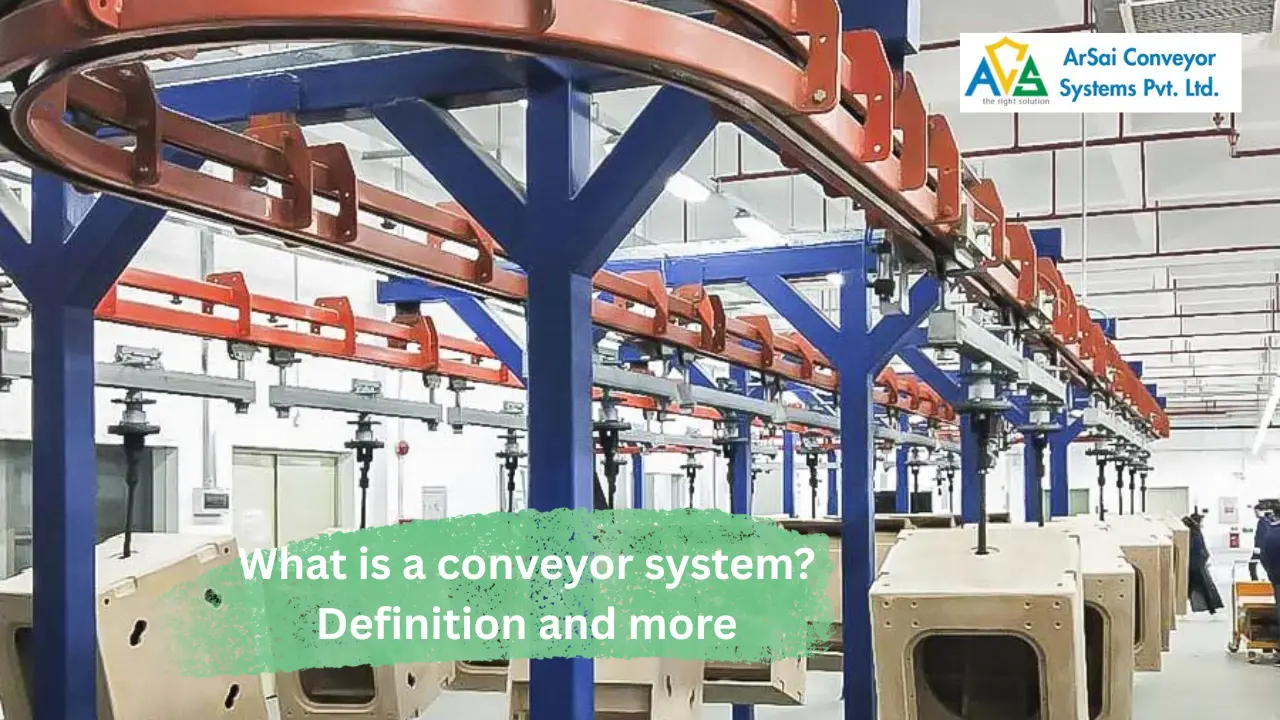
A conveyor-system is a mechanical arrangement that transfers materials, products, or goods from one place to another without much manual effort. These conveying systems provide continuous movement with the help of belts, rollers, chains, screws, or slats.
In today’s automated environment, the main goal of conveyor-systems is to streamline the process, reduce delays, and maintain production flow.
How Do Conveyor Systems Work?
Conveyor systems work on a simple but effective working principle. An electric motor powers the system, which drives the belt, roller, or chain. When a product is placed on the conveyor, it moves along a defined path at a fixed speed.
Modern conveying systems use sensors and control panels, which enable speed control, direction changes, and safety monitoring. This is why conveyor-systems are considered highly reliable in manufacturing and logistics operations.
Benefits of Conveyor Systems
The biggest advantage of using conveyor-systems in industrial units is that the workflow remains uninterrupted. Due to reduced manual handling, production speed increases, and errors are also minimized.
Conveying systems reduce the physical load on workers, which improves workplace safety. In the long term, these systems help reduce operational costs and maintain consistent output quality.
Types and Examples of Conveyor-Systems
Different types of conveyor-systems are available for different industries. Belt conveyors are mostly used for bulk materials and packaged goods, while roller conveyors are popular for moving cartons and pallets in warehouses.
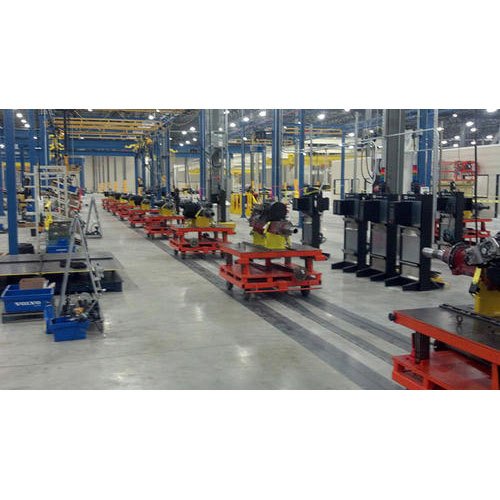
Chain conveyors are used in heavy-duty applications such as automotive plants. Screw conveyors are suitable for powders and granular materials, while slat conveyors are best for assembly lines and heavy material handling. The selection of all these conveying systems depends on the application.
Essential Parts of a Conveyor System
If we understand what a conveyor system is technically, every conveyor system consists of some essential parts. The conveyor belt or medium carries the material, while the motor and drive unit power the system.
Rollers and pulleys ensure smooth movement, and the frame structure supports the entire system. Advanced conveying systems also have control panels that ensure automation and safety.
How to Choose the Right Conveyor System
Selecting the right conveyor system directly impacts productivity and maintenance costs. Therefore, it is very important to consider all factors during the planning stage.
- Product Requirements– The size, weight, shape, and nature of the product determine which conveyor system will be suitable. Robust conveying systems are needed for heavy or abrasive materials, while smooth-surface conveyors are preferred for delicate products.
- Process Requirements– The conveyor-system should integrate perfectly with the production process. The design of the conveyor is different for each process—assembly, packaging, or inspection. If the system is not designed according to the process flow, bottlenecks can be created.
- Flow Rate– The flow rate indicates how much material needs to be moved in a specific time. High-capacity industries require high-speed and continuous conveyor-systems to ensure that production does not stop.
- Transfer Requirements– If the product needs to be transferred from one conveyor to another or to a machine, the design of the transfer points is very important. Proper transfer planning can avoid product damage and material loss.
ArSai Conveyor Systems Pvt. Ltd. designs customized conveying systems by analyzing all these parameters.
How Much Do Conveyor Systems Cost?
The cost of conveyor-systems is not a fixed figure. It depends on the type of system, length, load capacity, material, and level of automation. Simple conveyors are relatively economical, while fully automated conveying systems require a higher initial investment.
However, in the long term, these systems reduce maintenance costs and increase productivity, which makes the overall return on investment strong.
Conclusion
In today’s industrial scenario, a conveyor system is not just a definition, but a solution for efficiency and growth. Conveyor systems provide industries with fast, safe, and reliable material handling.
Conveying systems designed with the right design and quality lead businesses towards smooth operations and long-term success. ArSai Conveyor Systems Pvt. Ltd. has always focused on providing clients with the best conveyor solutions tailored to their specific processes.