4 Types of Conveyor Belt Materials
Conveyor belts play an important role in modern industries. They make the transfer of goods smooth and fast. Every sector uses different types of conveyor belts depending on the products and working conditions. The choice of belt material is very important because it decides the life of the system and the speed of operation. At ArSai Conveyor Systems Pvt. Ltd we provide high quality conveyor solutions to suit the exact requirement of industries. In this guide we will explain four main types of conveyor belt materials and their features in simple words.
Introduction to Conveyor Belt Materials
A conveyor belt is a flexible surface that moves items from one place to another with the help of pulleys and rollers. The material used in the belt is chosen based on the type of load the temperature of the workplace and the nature of the industry. Industries such as food mining cement logistics packaging and automotive all need belts that match their working environment. Using the wrong material can cause high maintenance cost and lower productivity.
At ArSai Conveyor Systems Pvt. Ltd we believe in offering belts that give strength durability and value. Our team understands the need of each sector and provides belts that last longer and perform well. Now let us look at the four common types of conveyor belt materials used across industries.
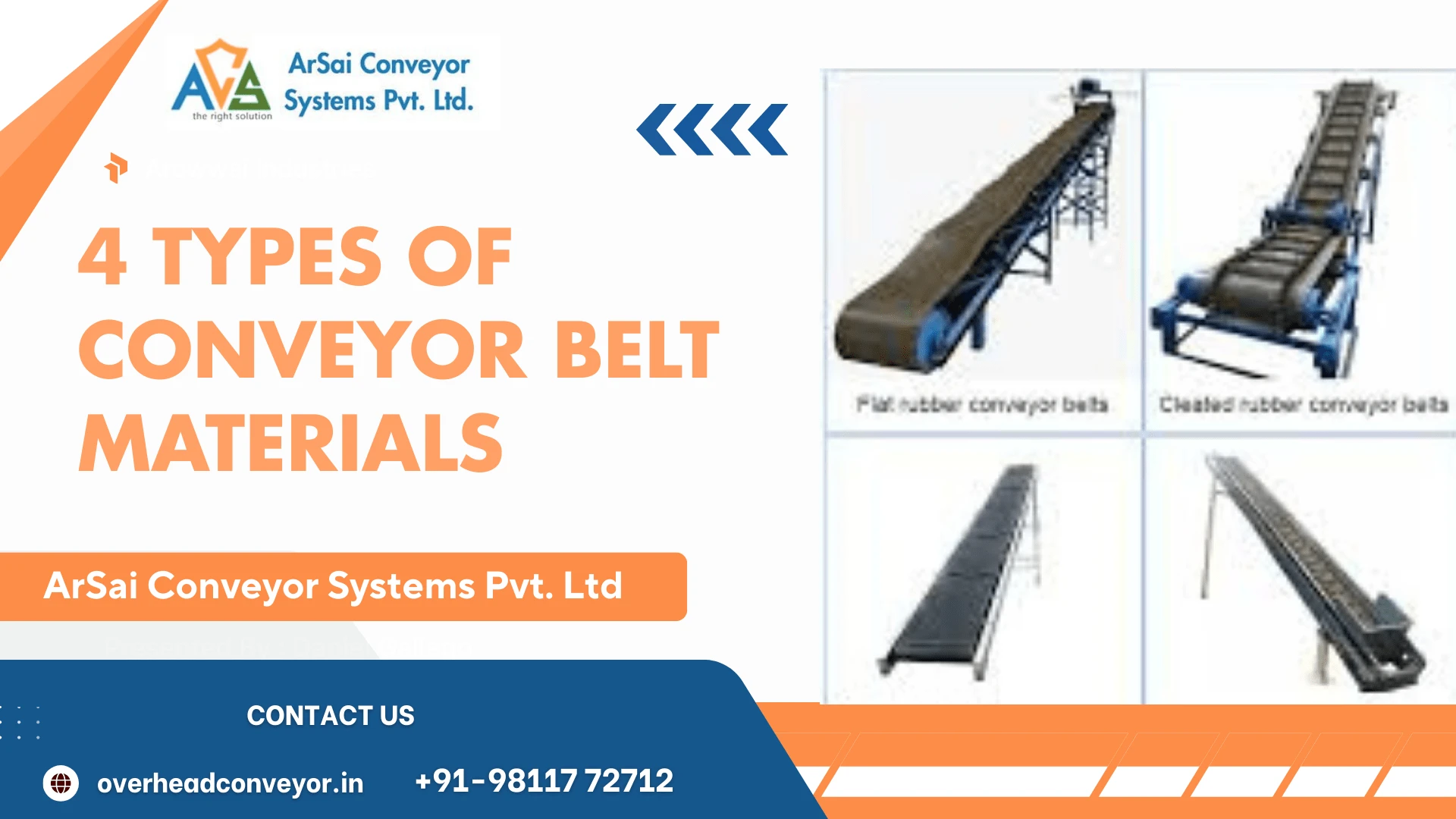
1. Rubber Conveyor Belts
Rubber belts are one of the oldest and most widely used conveyor belt materials. They are popular because of their flexibility strength and suitability for different conditions.
Features of Rubber Belts
- Made from natural or synthetic rubber layers
- High resistance to abrasion
- Suitable for heavy loads and harsh environments
- Can handle both wet and dry products
Rubber belts are common in industries like mining cement stone crushing and power plant. They can transport raw materials coal stones and bulky goods without damage. These belts also perform well against impact and can run for long hours with low wear.
Different grades of rubber belts are available. Heat resistant belts are used where temperature is high while oil resistant belts are used in plants where oily products come in contact with the belt. Flame retardant rubber belts are used in mining to ensure safety. ArSai Conveyor Systems Pvt. Ltd provides strong rubber belts that suit each of these needs.
2. PVC Conveyor Belts
PVC stands for polyvinyl chloride. PVC belts are mostly used in light and medium duty applications. They are smooth hygienic and easy to clean.
Features of PVC Belts
- Lightweight and flexible
- Resistant to moisture and chemicals
- Hygienic surface suitable for food and pharma
- Low cost and easy maintenance
PVC belts are used in food processing bakery pharmaceutical packaging airports and retail sectors. These belts have a clean surface that does not absorb liquids which makes them safe for handling food. They can also be customized with cleats and sidewalls for incline movement.
At ArSai Conveyor Systems Pvt. Ltd we supply high grade PVC belts that meet hygiene standards and are safe for food contact. We design belts that help industries achieve smooth operations while meeting strict quality norms.
3. PU Conveyor Belts
PU stands for polyurethane. PU conveyor belts are stronger and more durable than PVC belts. They are also used in food processing units but they offer higher mechanical strength.
Features of PU Belts
- Strong and wear resistant
- Withstand higher temperature than PVC
- Food grade surface safe for direct contact
- Flexible and lightweight
PU belts are preferred in bakery meat poultry and confectionery units. They perform better where the belt faces high tension. These belts also have low bacterial growth due to their hygienic surface.
ArSai Conveyor Systems Pvt. Ltd provides PU belts that meet international safety standards. Our PU belts ensure that food items remain safe while operations continue smoothly.
4. Metal Conveyor Belts
Metal belts are made using stainless steel or other metal wires. They are not common in all industries but are highly important for sectors that need heat resistance strength and clean operations.
Features of Metal Belts
- Strong and durable for heavy duty use
- Withstand high temperature
- Easy to clean and hygienic
- Long service life
Metal belts are used in baking electronics glass manufacturing and chemical plants. They work well in ovens furnaces and other high temperature environments. These belts can also handle sharp products without damage.
At ArSai Conveyor Systems Pvt. Ltd we design metal conveyor belts with precision so that they match industrial requirements. We make belts that last longer and save the cost of frequent change.
Choosing the Right Conveyor Belt
Every industry has its own requirement. Selecting the right belt material depends on many factors such as
- Type of product to be moved
- Weight of load
- Temperature of workplace
- Contact with oil or chemicals
- Hygiene standards required
- Speed of belt
If your industry handles food products then PVC or PU belts are the right choice. If your business deals with coal stones or bulk raw material then rubber belts are best. If high temperature or special process is involved then metal belts are the most suitable.
ArSai Conveyor Systems Pvt. Ltd helps industries analyze all these factors and choose the correct belt for long lasting performance.
Benefits of High Quality Conveyor Belts from ArSai Conveyor Systems Pvt. Ltd
When industries select conveyor belts from a trusted company they get advantages such as
- Long life and low maintenance
- Smooth transfer of goods without product damage
- Safety of workers and materials
- High speed and continuous operation
- Reduction in downtime and higher productivity
We at ArSai Conveyor Systems Pvt. Ltd focus on quality and reliability. Our belts are built to perform in tough industrial conditions. Whether your need is small scale packaging or large heavy duty material handling we provide the best conveyor solutions.
Conclusion
Conveyor belts are the lifeline of many industries and the choice of belt material is very important. The four common types of conveyor belt materials are rubber PVC PU and metal. Each has its own features and benefits. Industries must study their exact requirement before choosing a belt. Using the right material ensures smooth operations cost saving and higher productivity.
ArSai Conveyor Systems Pvt. Ltd is a trusted name in providing top quality conveyor belts and systems. We guide our clients to select the most suitable belt material and offer long term support with our products.
Frequently Asked Questions (FAQs)
What types of conveyor belt materials are most common?
The most common types are rubber, PVC (polyvinyl chloride), PU (polyurethane), and metal. Each has unique benefits for different industries and applications.
Which conveyor belt material is best for heavy and abrasive materials?
Rubber conveyor belts are best suited for heavy loads and abrasive materials like coal stones or raw minerals due to their durability and resistance to wear.
What conveyor belts should be used in food processing industries?
PVC and PU belts are preferred for food processing because they are hygienic, easy to clean, and meet food safety standards. PU belts offer higher strength and flexibility.
Can conveyor belts handle high temperatures?
Metal conveyor belts are ideal for high temperature environments such as ovens or furnaces. Some specialized rubber belts can also withstand moderate heat.
How do I choose the right conveyor belt material?
Consider the product type, weight, environmental conditions like temperature and moisture, chemical exposure, and hygiene needs. ArSai Conveyor Systems Pvt. Ltd helps clients find the best match.
How long do conveyor belts typically last?
Belt life depends on material quality, usage, load, and maintenance. High-quality belts from trusted suppliers like ArSai Conveyor Systems Pvt. Ltd generally last several years with proper care.
Are custom conveyor belts available?
Yes, ArSai Conveyor Systems Pvt. Ltd provides custom-made belts tailored to specific industry needs including custom sizes, strength, and surface patterns.
What maintenance is required for conveyor belts?
Regular inspection for wear and tear, cleaning to remove debris, proper tension adjustment, and timely repairs help extend the belt’s service life.
Do conveyor belts come with safety certifications?
Reputable manufacturers ensure their belts comply with industry safety and hygiene standards especially for food and pharmaceutical sectors. ArSai Conveyor Systems Pvt. Ltd provides certified belts.
What are the signs that a conveyor belt needs replacement?
Visible cracks, tearing, frequent slipping, reduced grip, unusual noises, or damaged edges indicate the belt may need replacement to avoid operational issues.